

Charlotte Schmid
Professor
Geographic area
South Asia, Southeast Asia
Fields of study
Archeology, Epigraphy, History, Art history, History of religions
Charlotte Schmid
Professor
Geographic area
South Asia, Southeast Asia
Fields of study
Archeology, Epigraphy, History, Art history, History of religions
Research themes / topics
The Construction of Hinduism in North India, South India, and Southeast Asia: Iconography, Epigraphy, Literature
Dynastic Identities in South India
The emergence of writing in India
Relations between Roman Egypt and South India
EFEO Lines of research
Production and dissemination of knowledge, writing, and images
Religions, representations, and powers
Territories, resources, identities
Research in progress
The Construction of Hinduism Between North and South India
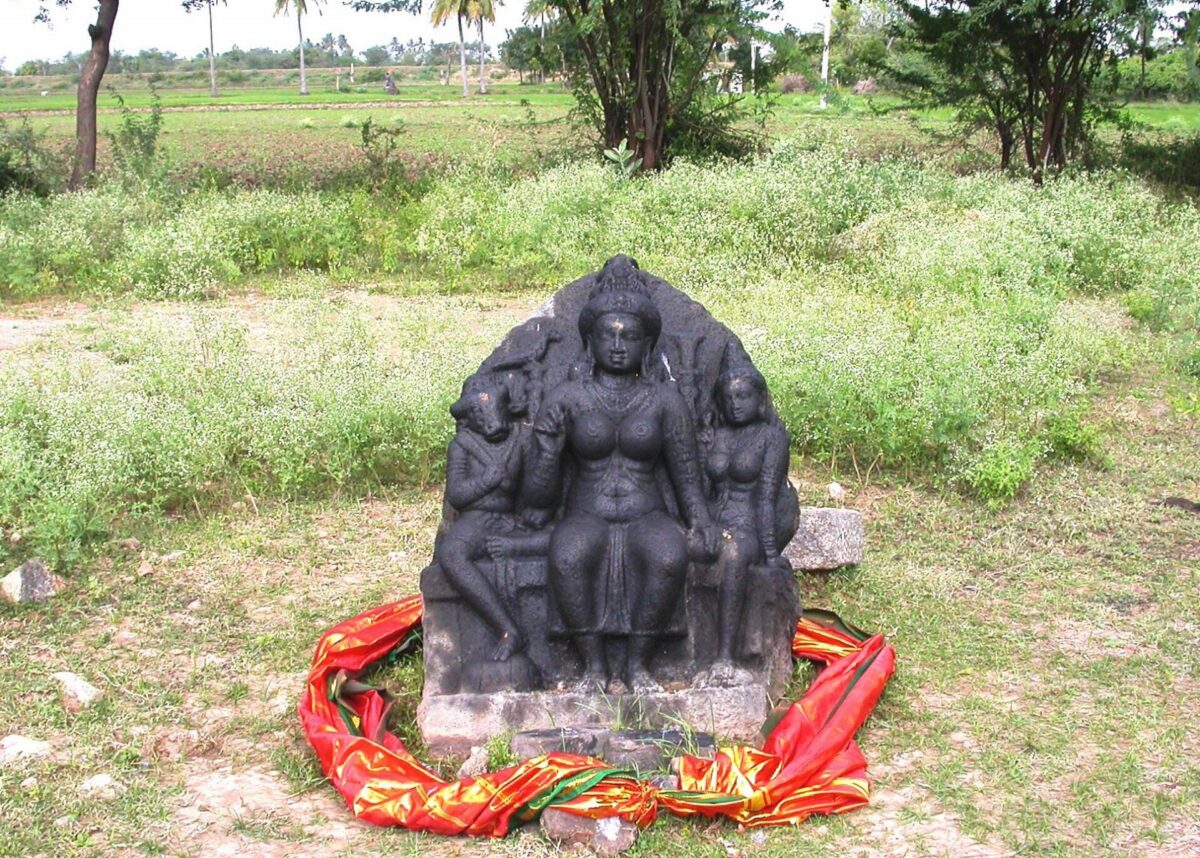
Based on studies of texts (literature, epigraphy) and archaeology in the broadest sense, we highlight some of the mechanisms involved in the construction of pan-Indian, regional, and local Hinduism, from the emergence of the movements that constitute it at the beginning of the first millennium to the beginning of the second millennium: relations with royalty, indigenization, representations of female deities, specificities of cults developed in South India, incarnations of so-called Bhakti deities in local or regional deities, development of the character of Agastya and his spread throughout Southeast Asia.
Dynastic identities…
Or how, from the first millennium onwards, sources from several fields (Tamil mahākāvya, legends featuring classical Tamil literature known as Caṅkam at the end of the first millennium, epigraphic panegyrics in Sanskrit and Tamil from the Pāṇṭiya and Cōḻa dynasties; monuments, iconography) bear witness to the construction of dynastic identities in southern India.
The emergence of writing in India
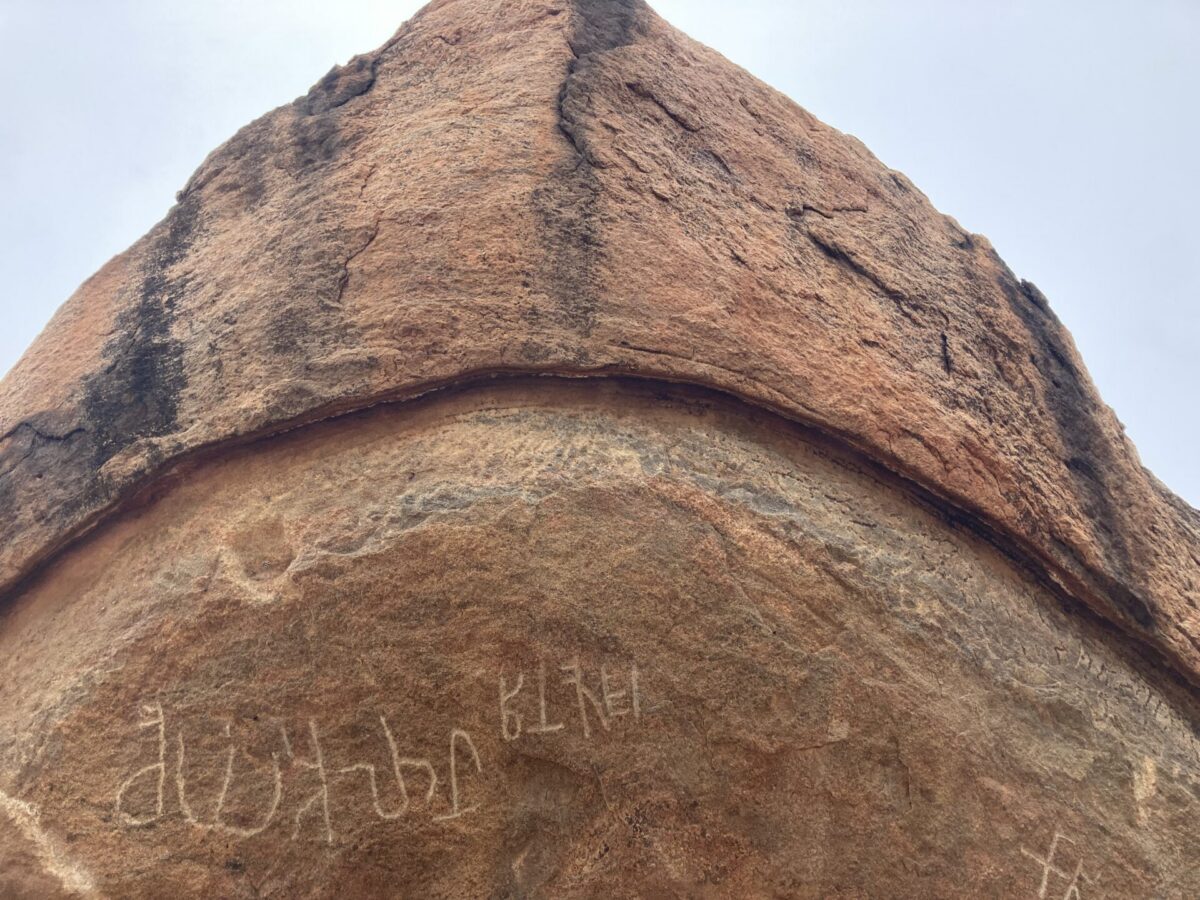
A comparison of the Brahmī inscriptions found in southern Asia and the inscriptions of Emperor Maurya Aśoka allows us to approach the emergence of writing in India from several angles. The historiographical perspective, which has been favored over the past two years, highlights the role played by southern India in the phenomenon and the specificities of the use of writing when it first appeared in India, depending on whether one is looking at the context of northern or southern India.
Relations between Roman Egypt and South India
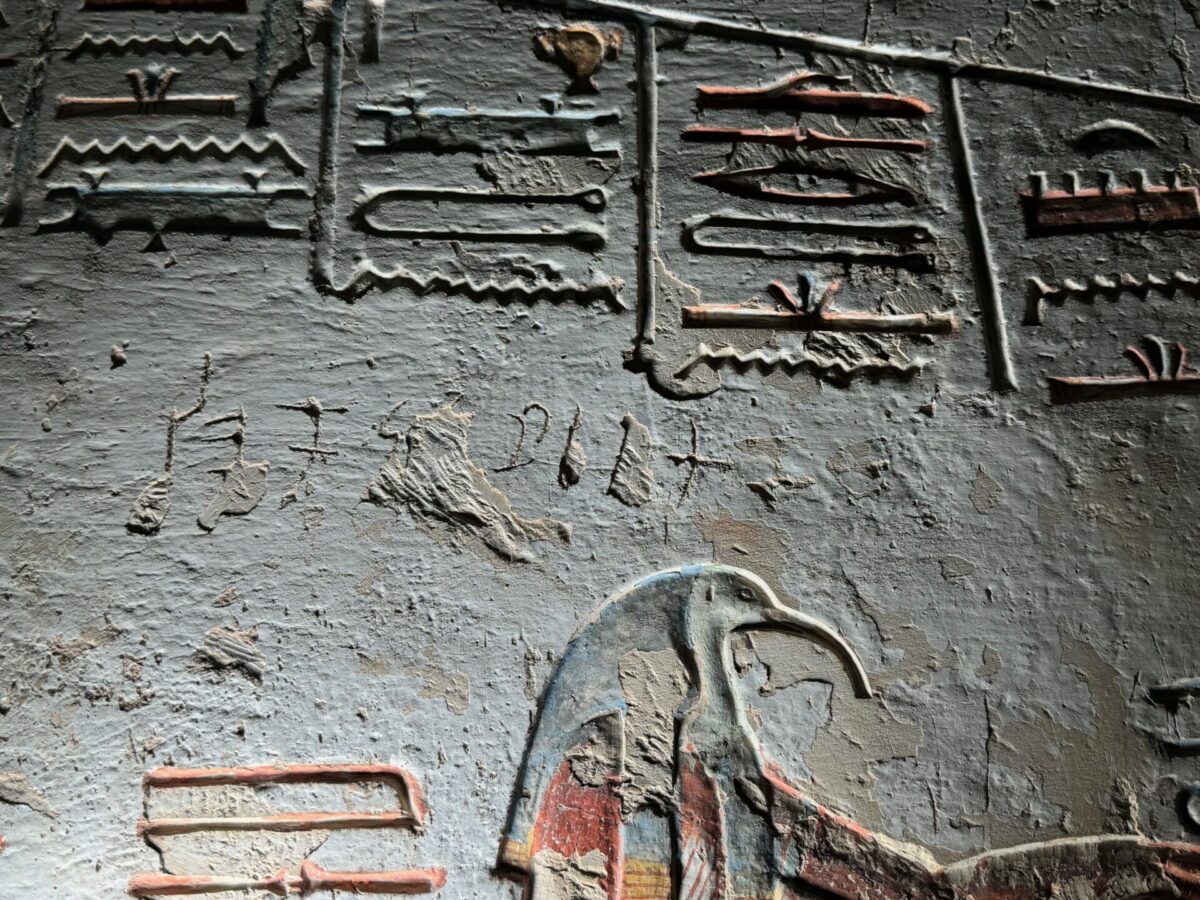
The discovery of Indian inscriptions in several tombs in the Valley of the Kings has enriched studies conducted from the Red Sea port of Berenice on relations between India and Egypt during the Roman period. Composed mainly in Tamil, attesting to the interest of individuals from the Indian peninsula in these Egyptian tombs, these inscriptions correspond to evidence found in southern India, particularly at the site of Arikamedu in the territory of Pondicherry, suggesting the establishment of Western communities at the same time (2nd-3rd centuries).
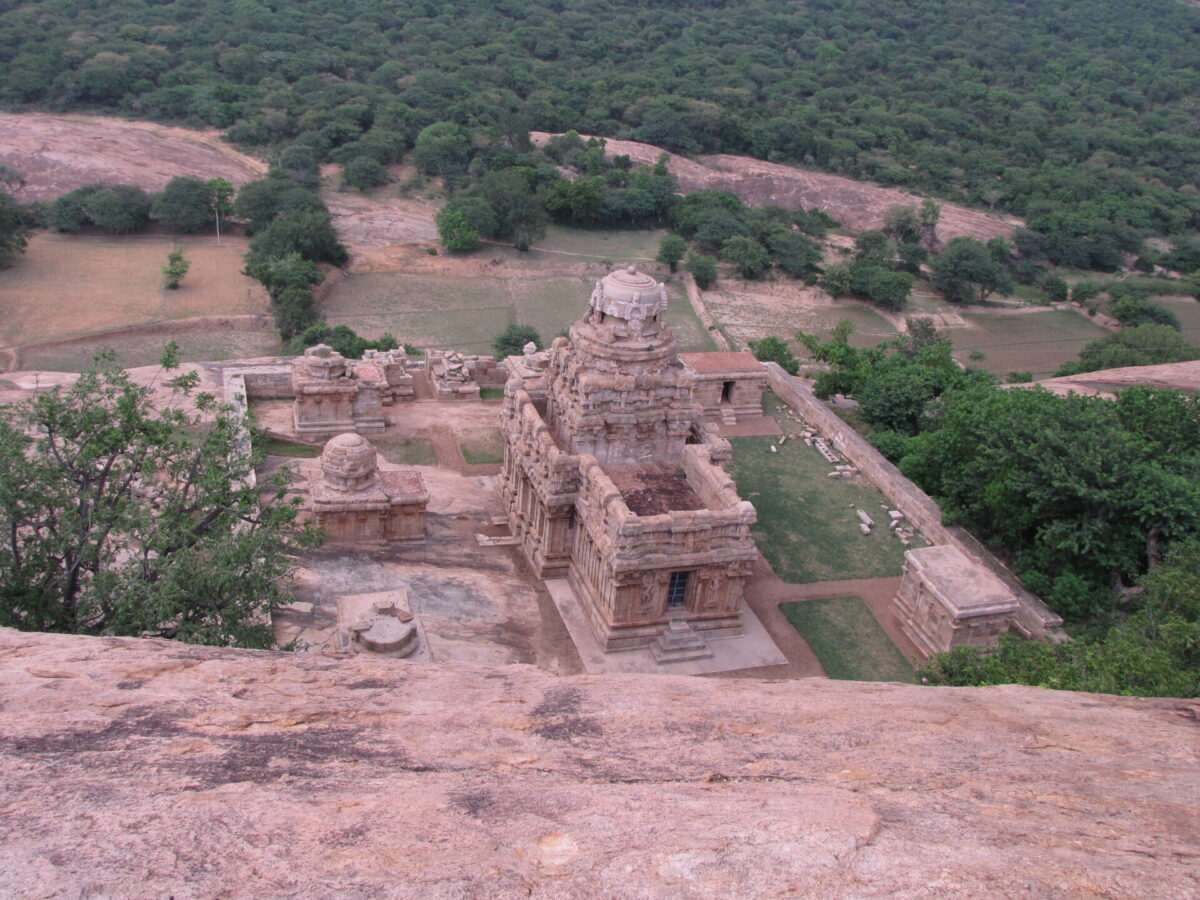
Studies and training
- 1985, Former student of the École du Louvre, India and India abroad.
- 1986, Diploma in museology from the École du Louvre; Bachelor’s degree in classical literature (Paris IV).
- 1987, Master’s degree in classical literature; Bachelor’s degree in Sanskrit (Paris III).
- 1989, Agrégation and CAPES in classical literature.
- 1991, Diploma in Advanced Studies (Paris III / Collège de France).
- 1995, Doctorate in History of Religions (“The Beginnings of Krishnaite Cults in the Mathurā Region”), under the supervision of Bruno Dagens and Gérard Fussman (Paris III / Collège de France).
- 1998, Registration on the lists of eligibility for the position of lecturer in the following sections: 15 (Arabic, Chinese, Japanese, Hebrew languages and literatures, other linguistic fields); 8 (ancient languages and literatures) and 21 (history and archaeology of the ancient world).
- 2011, Accreditation to supervise research, École Pratique des Hautes Études.
Professional history in EFEO
- Head of the Pondicherry Center, 2000-2002.
- Director of Studies, 2014-2017.
- Head of Publications, 2014-2023.
Professional history
- Academic holder at the Académie de Versailles, from 1989 to 1991; 1993-94; 1995-1999.
- Scholarship holder from the Ministry of Foreign Affairs (Romain Rolland), 1991-1993.
- Scholarship holder of the Thiers Foundation (Académie des Inscriptions et Belles-Lettres), 1994-1995.
Lectures
- Charlotte Schmid avec Saarthak Singh
Séminaire EPHE dans le cadre du Master Études Asiatiques, Épigraphie et iconographie du monde indien : Écrire, inscrire et mettre en scène : la culture matérielle des textes dans le monde indien
Maison de l’Asie
22 av du Président-Wilson 75016 Paris
Les jeudis de 13h à 15h
du 9 octobre 2025 au 4 juin 2026
Doctoral supervising
- Nicolas Cane, PhD, 2017, Cempiyaṉ Mahādevī, 10th-century queen and devotee in Tamil country.
- Anne-Colombe Launois, PhD, 2021, Images of Indian royalty, the Sikh dynasty of Patiala and its fortified palace, 18th-19th centuries, co-supervised with Michel Boivin (EHESS).
- Valérie Gillet, HDR, defended in 2022, Temples and deities, dynastic powers and local communities: an outline of Tamil society in the first millennium AD.
- Johan Levillain, PhD, defended in 2023, Attempt to define a regional culture in Madhya Pradesh: stylistic, iconographic, and contextual study of the remains of Ashapuri (9th-11th centuries).
- Nora Bourquin, PhD, The Buffalo Slayer in Ancient Cambodia, enrolled since September 2020.
- Léa Maronet, PhD, Iconographic, stylistic, and computational study of Ashokan motifs in the formative period of Indian art (3rd century BCE-3rd century CE), enrolled since September 2022.
- Ulysse Barthel, PhD, Religions in the Kuṣāṇa Empire (early 1st century–mid-3rd century CE): deities, shrines, cults, enrolled since September 2023.
-
Akarsh Raghunath, PhD, Tamil Buddhism, thesis co-supervised with Jinah Kim, Harvard University (USA), started in 2023.
Defenses:
- Yuko Yokochi, University of Groningen (Netherlands), 2005, “The Rise of the Warrior Goddess in Ancient India, A Study of the Myth Cycle of Kauśiki-Vindhyavāsinī in the Skandapurāṇa.”
- Caroline Riberaigua, École du Louvre, 2007, “Dance and its representations in the Hindu temples of Orissa between the end of the 12th and the end of the 13th century.”
- Uthaya Velupillai, Paris 3, 2013, “Cīkāḻi: hymns, heroes, history.”
Fanny Dutillieux, Paris 4, 2014, “Sculpture in Himachal Pradesh between the 7th and 14th centuries.” - Danielle Guéret, Paris 4, 2015, “The painted decoration of Buddhist monasteries in Cambodia, late 19th century-third quarter of the 20th century.”
- Marion Le Sauce-Carnis, Paris 3, 2016, “From Epic Hero to Divine Icon: Sculpted Decorations of the Vijayanagar Empire.”
- Anne Davrinche, Paris 3, 2017, “The religious landscape of Senji, an architectural and iconographic study of religious buildings in the city of Senji (Tamil Nadu, South India) and its surrounding region.”
- Virginie Olivier, Paris 4, 2018, “The representation of the socio-cosmic order: interpretation of the role of Brahmā in 6th-9th century sculpture in Tamil Nadu and the Deccan.”
- Laetitia Ibanez, PhD, Inalco, 2020, « The inhabitant of thresholds. Mauṉi (1907-1985) and his work in the construction of Tamil literary modernity. »
- Nils Martin, PhD, defended in 2022, “The Wanla group of monuments: on 14th-century Tibetan Buddhist murals in Ladakh.”
- Karine Ladrech, HDR, defended in 2022, “The Emergence and Development of Jain Sanctuaries in Northern Tamil Nadu.”
- Louise Roche, PhD, defended in 2023, “A History of the Banteay Samrae Temple. Introduction to the Study of the Renewal of Iconographic Practices in Cambodia during the Mahīdharapura Dynasty.”
Bibliographie (HAL)
Ouvrages
Charlotte Schmid (Dir.). Mémoires de l'Inde. Magellan & Cie; Ecole française d'Extrême-Orient, 63 p., 2021. ⟨hal-03626336⟩
Charlotte Schmid (Dir.). « Bhakti in its infancy: the Skanda-Murukaṉ of the Kailāsanātha of Kāñcīpuram », acte du colloque « The Archaeology of bhakti » (17-19 août 2011). In press. ⟨halshs-02562025⟩
Emmanuel Francis, Charlotte Schmid (Dir.). The Archaeology of Bhakti II: Royal Bhakti, Local Bhakti. Institut français de Pondichéry & École française d’Extrême-Orient, pp.609, 2016. ⟨hal-01960494⟩
Emmanuel Francis, Charlotte Schmid (Dir.). The Archaeology of Bhakti I: Mathurā and Maturai, Back and Forth. Institut français de Pondichéry & École française d’Extrême-Orient, pp.XIII-366, 2014. ⟨hal-01960482⟩
Charlotte Schmid. Sur le chemin de Krishna : la flûte et ses voies, l’École française d’Extrême-Orient, Coll. Sequens, Paris, 168 p. 2014. ⟨halshs-02555415⟩
Charlotte Schmid. La Bhakti d’une reine, Śiva à Tirucceṉṉampūṇṭi, l'l’École française d’Extrême-Orient/ Institut français de Pondichéry, Coll. Collection Indologie, Paris. 2014. ⟨halshs-02555449⟩
Charlotte Schmid. Le Don de voir, premières représentations krishnaïtes de la région de Mathurâ. Ecole française d'Extrême-Orient, 2010, PEFEO, monographie n° 193. ⟨halshs-02555338⟩
Chapitres d‘ouvrage
Charlotte Schmid. Architectural bilingualism in the Côḻa kingdom. Appasamy Murugaiyan; Edith Parlier. Whispering of Inscriptions: South Indian Epigraphy and Art History: Papers from an International Symposium in memory of Professor Noboru Karashima (Paris, 12–13 October 2017), volume 2, Indica et Buddhica, pp.53-97, 2020, 978-0-473-56776-7. ⟨hal-03626364⟩
Emmanuel Francis, Charlotte Schmid. Introduction: King and Place. Emmanuel Francis; Schmid Charlotte. The Archaeology of Bhakti II: Royal Bhakti, Local Bhakti, Institut français de Pondichéry & École française d’Extrême-Orient, pp.1-32, 2016. ⟨hal-01960579⟩
Charlotte Schmid. The edifice of bhakti, towards an “archaeological” reading of the Tēvāram and Periya-purāṇam. Valérie Gillet. Mapping the Chronology of Bhakti: Milestones, Stepping Stones, and Stumbling Stones, Proceedings of a workshop held in honour of Paṇḍit R. Varadadesikan, 124, EFEO, 2014. ⟨halshs-02561914⟩
Emmanuel Francis, Charlotte Schmid. Introduction: Towards an Archaeology of Bhakti. Emmanuel Francis; Charlotte Schmid. The Archaeology of Bhakti I: Mathurā and Maturai, Back and Forth, Institut français de Pondichéry & École française d’Extrême-Orient, pp.1-29, 2014. ⟨hal-01960552⟩
Emmanuel Francis, Charlotte Schmid. Preface. Bahour S. Kuppusamy; G. Vijayavenugopal. Pondicherry Inscriptions: Part II, Collection Indologie (83.2), Institut français de Pondichéry; École française d’Extrême-Orient, pp.v-xlvii, 2010. ⟨halshs-02562096⟩
Charlotte Schmid. Of Gods and Mortals: Lila Copa. Catherine Jarrige; Vincent Lefèvre. South Asian archaeology 2001 : proceedings of the Sixteenth international conference of the European association of South Asian archaeologists, Vol. II, Éditions Recherche sur les Civilisations, pp.623-636, 2005, 9782865383016. ⟨halshs-02556480⟩
Charlotte Schmid. Mahiṣāsuramardinī, a Vaiṣṇava Goddess ?. R. Nagaswamy. Foundations of Indian Art. Proceedings of the Chidambaram Seminar on Art and Religion., Tamil Arts Academy, pp.143-162, 2001. ⟨halshs-02556131⟩
Charlotte Schmid. Krishna, l’enfant de Mathurā. Flora Blanchon. Asie IV, Enfances, Publications de Paris-Sorbonne, pp.57-79, 1997. ⟨halshs-02555597⟩
Articles dans une revue
Charlotte Schmid. The Carving of Kṛṣṇa’s Legend: North and South, Back and Forth. Religions, 2020, 11 (9), pp.439. ⟨10.3390/rel11090439⟩. ⟨halshs-03138544⟩
Charlotte Schmid. Les « rois anciens » du pays tamoul. Bulletin de l'Ecole française d'Extrême-Orient, 2020, 106 (1), pp.109 - 156. ⟨10.3406/befeo.2020.6330⟩. ⟨hal-03626354⟩
Charlotte Schmid. De la Grèce à l’Inde, Krishna. Histoire de l'art, 2018, 2018/1, pp.141-152. ⟨halshs-03043074⟩
Charlotte Schmid. Un fer de lance sanskrit en pays tamoul : vel et polysémie iconique. Echo des études romanes, 2014, vol. 35, 2, pp.183-210. ⟨hal-03133048⟩
Charlotte Schmid. « The contribution of Tamil literature to the Kṛṣṇa figure of the Sanskrit texts: the case of the kaṉṟu in Cilappatikāram 17 », Bilingualism and Cross-cultural Fertilisation: Sanskrit and Tamil in Mediaeval India, Whitney Cox & Vincenzo Vergiani éd., Ecole française d’Extrême-Orient/Institut français de Pondichéry, Pondichéry. Collection Indologie, 2012, vol. 120, p. 15-52. ⟨halshs-02561857⟩
Charlotte Schmid. « Rite and Representation: Recent Discoveries of Pallava Goddesses of the Tamil Land », vol. 63. no. 2, p. 84-89. Marg, 2011. ⟨halshs-02557412⟩
Charlotte Schmid. Du rite au mythe : les Tueuses de buffle de l’Inde ancienne. Artibus Asiae, 2011, p. 181-216. ⟨halshs-02561812⟩
Charlotte Schmid. Épigraphie et iconographie au Kailāsanātha de Kāñcipuram, la danse de Śiva. Annuaire de l’École pratique des hautes études : résumés des conférences et travaux. Section des sciences religieuses, 2010, Tome 117, pp.71-77. ⟨10.4000/asr.789⟩. ⟨halshs-02557328⟩
Charlotte Schmid. Grandes figures et petites histoires : le temple de village de Tirumaṅkalam. Annuaire de l’École pratique des hautes études : résumés des conférences et travaux. Section des sciences religieuses, 2009, Tome 116, pp.61-67. ⟨10.4000/asr.600⟩. ⟨halshs-02557192⟩
Charlotte Schmid. « Aṭikaḷ Kaṇṭaṉ Māṟampāvai à Tirucceṉṉampūṇṭi, aux friches de l’art chola », tome 115. Annuaire de l’École pratique des hautes études : résumés des conférences et travaux. Section des sciences religieuses, 2008, p. 53-56. ⟨10.3406/befeo.2005.6002⟩. ⟨halshs-02557101⟩
Charlotte Schmid. Au seuil du monde divin : reflets et passages du dieu d'Ālantuṟai à Puḷḷamaṅkai. Bulletin de l'Ecole française d'Extrême-Orient, 2007, pp.39-158. ⟨10.3406/befeo.2005.5983⟩. ⟨halshs-02556994⟩
Emmanuel Francis, Valérie Gillet, Charlotte Schmid. De loin, de près : Chronique des études pallava III. Bulletin de l'Ecole française d'Extrême-Orient, 2007, 94, pp.253-317. ⟨10.3406/befeo.2007.6072⟩. ⟨halshs-00861754⟩
Charlotte Schmid. Conférences sur le concept de ‘Grande Déesse’ en Inde ancienne. Annuaire de l’École pratique des hautes études : résumés des conférences et travaux. Section des sciences religieuses, 2006, Tome 113, p. 119-122. ⟨halshs-02556663⟩
Emmanuel Francis, Valérie Gillet, Charlotte Schmid. Trésors inédits du pays tamoul : chronique des études pallava II. Vestiges pallava autour de Mahābalipuram et à Taccūr. Bulletin de l'Ecole française d'Extrême-Orient, 2006, 93, pp.430-481. ⟨10.3406/befeo.2006.6046⟩. ⟨halshs-00861774⟩
Charlotte Schmid. « Mahābalipuram : la Prospérité au double visage ». Journal Asiatique, 2005, 293, pp.459 - 527. ⟨halshs-02556440⟩
Charlotte Schmid. Figures de l’iconographie indienne : les divinités incarnées. Annuaire de l’École pratique des hautes études : résumés des conférences et travaux. Section des sciences religieuses, 2005, Tome 112, pp.129-131. ⟨halshs-02556461⟩
Emmanuel Francis, Valérie Gillet, Charlotte Schmid. L'eau et le feu : chronique des études pallava. Bulletin de l'Ecole française d'Extrême-Orient, 2005, 92, pp.581-612. ⟨10.3406/befeo.2005.6002⟩. ⟨halshs-00861732⟩
Charlotte Schmid. À propos des premières images de la Tueuse de buffle : déesses et krishnaïsme ancien. Bulletin de l'Ecole française d'Extrême-Orient, 2004, 90-91, p. 7-67. ⟨10.3406/befeo.2003.3607⟩. ⟨halshs-02556152⟩
Charlotte Schmid, Eva Wilden. Le tamoul en hiver, la Classical Tamil Winter School. Bulletin de l'Ecole française d'Extrême-Orient, 2004, 90-91, p. 483-485. ⟨10.3406/befeo.2003.3625⟩. ⟨halshs-02556181⟩
Charlotte Schmid. « Le Sanglier qui danse : étude iconographique d’un avatāra de Visnu », Du corps humain, au carrefour de plusieurs savoirs en Inde, Mélanges offerts à Arion Roșu par ses collègues et ses amis à l’occasion de son 80e anniversaire, travaux réunis et édités par Eugen Ciurtin, Centre d’Histoire des Religions, université de Bucarest-De Boccard, Éditions et diffusion, Bucarest/Paris, No.4-5, p. 579-610. Studia Asiatica, 2004. ⟨halshs-02556409⟩
Charlotte Schmid. Arts asiatiques Aventures divines de Kṛṣṇa : la līlā et les traditions narratives des temples cōḻa. Arts Asiatiques, 2002, p. 33-47. ⟨10.3406/arasi.2002.1479⟩. ⟨halshs-02556085⟩
Charlotte Schmid, André Couture. « The Harivaṃśa, the Goddess Ekānaṃśā, and the Iconography of the Vṛṣṇi Triads ». Journal of the American Oriental Society, 2001, 121(2), p. 92-173. ⟨halshs-02555998⟩
Charlotte Schmid. Représentations anciennes de Krsna luttant contre le cheval Keśin sur des haltères : l'avatāra de Visnu et le dieu du Mahābhārata. Bulletin de l'Ecole française d'Extrême-Orient, 1999, 86 (1), pp.65-104. ⟨10.3406/befeo.1999.3406⟩. ⟨hal-03026700⟩
Charlotte Schmid. « Représentations de Nārāyaṇa dans la Mathurā d’époque kouchane : les images cultuelles de Vāsudeva-Kṛṣṇa, la figure des Quatre-émanations et la ‘colonne de Nand’ ». Journal Asiatique, 1997, 285(1), p. 235-280. ⟨halshs-02555892⟩
Charlotte Schmid. Les Vaikuṇṭha gupta de Mathura : Viṣṇu ou Kṛṣṇa ?. Arts Asiatiques, 1997, 52, p. 60-80. ⟨10.3406/arasi.1997.1401⟩. ⟨halshs-02555783⟩
Charlotte Schmid. « L’enlèvement de l’arbre Pārijāta ». Bulletin d'Études Indiennes, 1997, p. 247-297. ⟨halshs-02555920⟩
Communications dans un colloque
Charlotte Schmid. Aux portes du passé, le gardien de la Ville de Celui qui prit le Gange (Inde, X-XXIe siècle). Journées d'étude "Usages et exploitations des mémoires de l'Antiquité", ERC AGRELITA, Jun 2025, Caen, France. ⟨hal-05261622⟩
Autres publications scientifiques
Emmanuel Francis, Charlotte Schmid. Notices "13 parèdre de Siva [i.e. Śiva]?", "14 Déesse non identifiée", "15 Kālī ou Cāmuṇḍā" et "27-29 Subrahmaṇya". 2013, pp.88-93, 114-119. ⟨halshs-00879574⟩