

Adam Wijker
Doctorant
Aire(s) géographique(s)
Asie du Sud-Est, Cambodge
Discipline(s)
Archéologie, Histoire, Urbanisme

Date d'entrée à l'EFEO
10/2021
Date de début de doctorat
21 octobre 2021
Institution de rattachement et école doctorale
Université Paris 1 Panthéon-Sorbonne, École doctorale d'archéologie ED 112
Laboratoire
UMR 8215 Trajectoires
Liens externes
Adam Wijker
Doctorant
Aire(s) géographique(s)
Asie du Sud-Est, Cambodge
Discipline(s)
Archéologie, Histoire, Urbanisme
Thèmes de recherche
L'urbanisme khmer, cartographie archéologique
Études et formation
- 2009-2012, Bachelor’s (BA) en Histoire, Vrije Universiteit Amsterdam
- 2012-2014, Master’s (MA) en Histoire, université d’Amsterdam
Thèse de doctorat
Angkor beyond Angkor: A comprehensive, lidar-based cartography and quantitative analysis of settlement patterns in the Khmer world
Sous la direction de Christophe Pottier (EFEO) & François Giligny (université Paris 1)
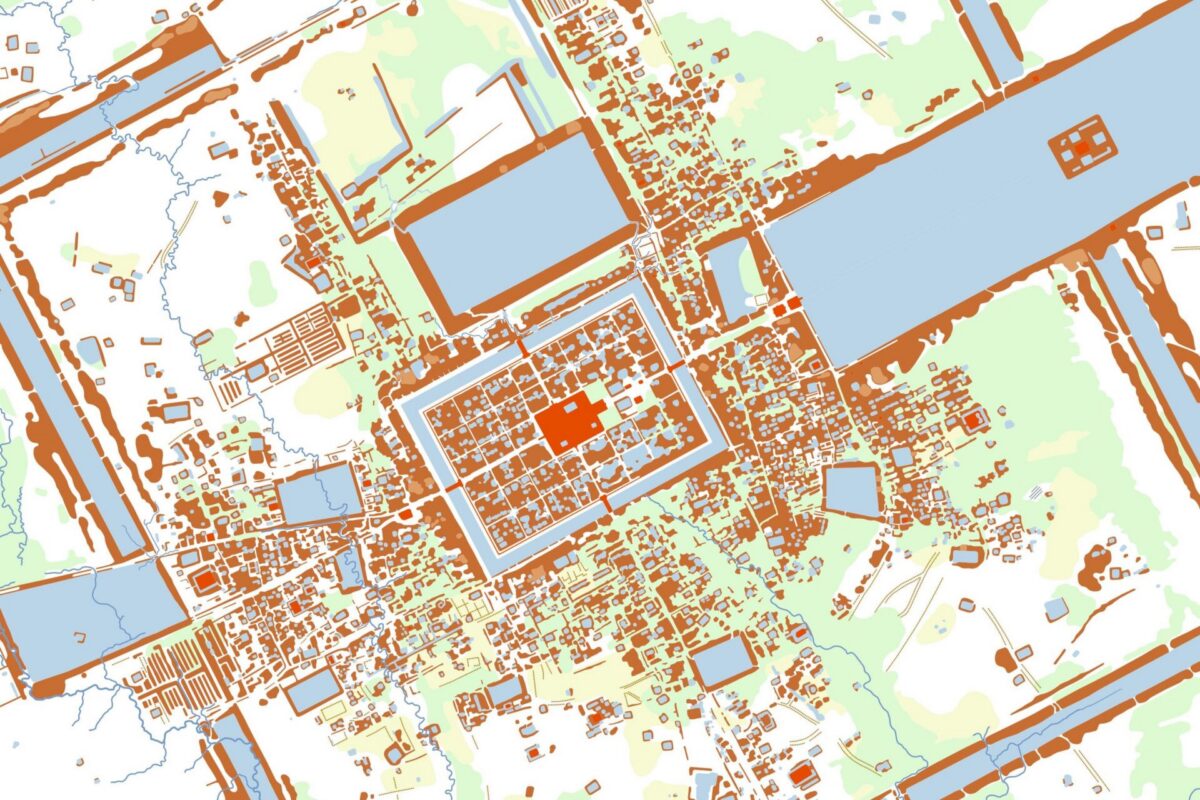
The city of Angkor, Cambodia, has been the subject of intensive study for well over a century. Mapping work in recent decades, based on remote sensing data, has identified thousands of subtle archaeological traces in the landscape, revealing the complex structure of the ancient city. Recent literature characterises Angkorian settlement patterns as having low occupation densities, indistinct boundaries, and a blend of habitation and agriculture. Yet little attention has been paid to urban settlements beyond the capital, and the assumption that these sites represented either precursors or microcosmic counterparts to the mode of urbanism visible at Angkor has not been seriously challenged. Based on the spatial analysis of lidar imagery, this thesis responds by presenting a set of detailed archaeological maps of nearly 6000 km2, embracing Angkor and a range of earlier and provincial settlement sites. The results are analysed along three axes, focusing on the location, density, and composition of settlement features. Using different metrics and methods of visualisation, it identifies both similarities and key differences. The outcomes will widen our understanding of the diversity of settlement forms in the Khmer world and their development through time. They will also have crucial implications for the study of more broadly applicable models of low-density urbanism and its trajectories elsewhere in the tropics.